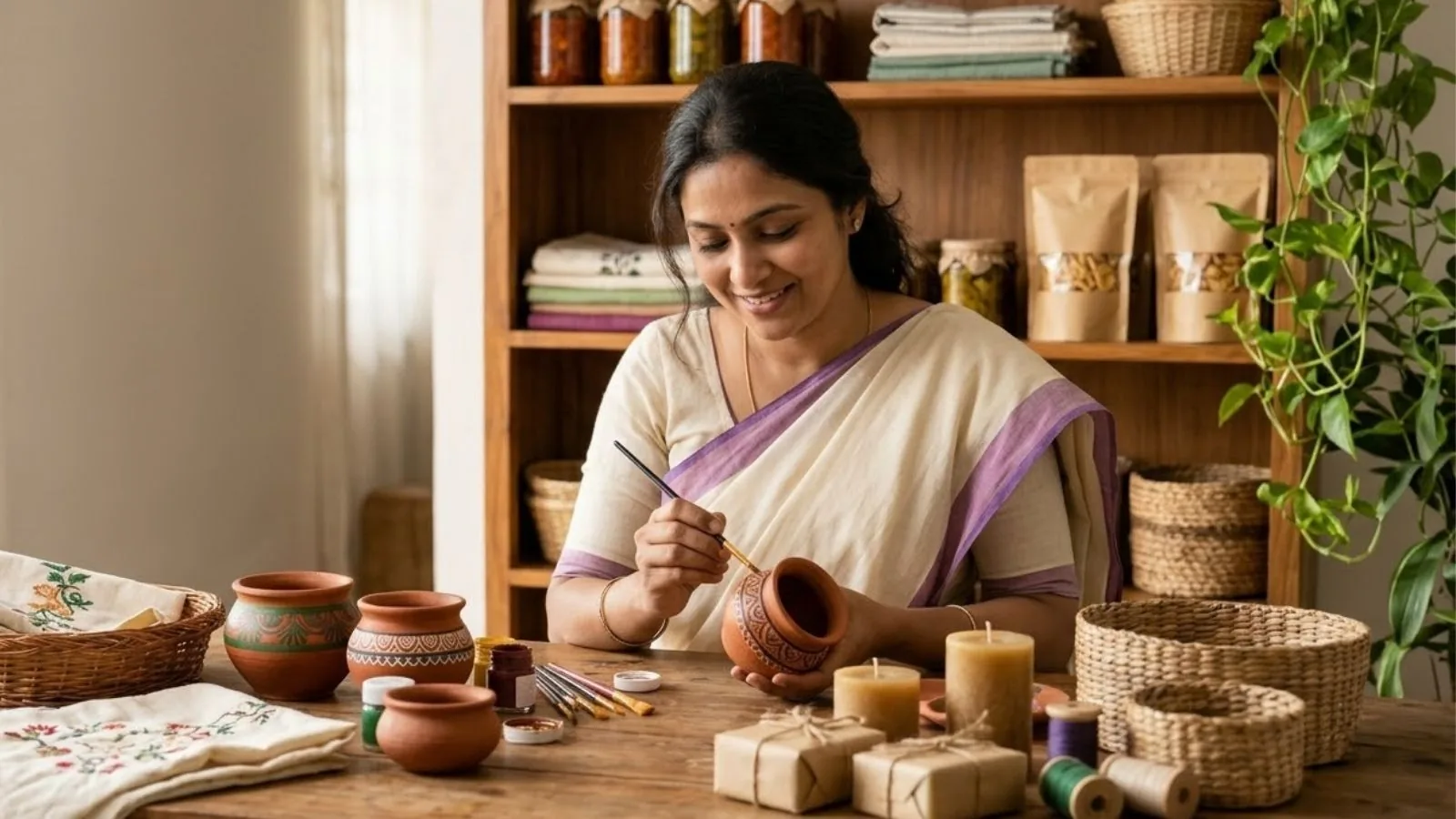






Every handmade product begins as a small idea. Maybe a maker sees a pattern on an old shawl. Maybe she wants a pot that feels like the ones from her grandmother's home. Or she simply wants a wall hanging that makes her own living room feel warmer.
That idea is where the story starts. The label on the finished piece may only show a name and a price. The story behind it is much bigger.
It starts with an idea
A handmade piece does not come from a factory plan. It comes from a person asking, "What if I made this?" She thinks about who it is for, where it will sit and how it will feel in the hand.
Sometimes the idea is new. Often it is an old design she has seen all her life, shaped in her own way. Either way, it begins in her mind long before the first thread is pulled or the first lump of clay is shaped.
The hours you do not see
When you hold a finished craft, you see the result. You do not see the steps that came before it.
- Design: sketching, choosing colours, trying a pattern again when it does not look right.
- Materials: picking the right yarn, cloth, clay or paint, and checking each one with care.
- Making: the slow part. Weaving, shaping, stitching or painting, often a little at a time between other work at home.
- Finishing: trimming loose threads, smoothing edges, checking every corner and fixing small flaws.
- Packing: wrapping the piece so it reaches you safely and looks good when you open it.
Each step takes patience. A piece may be set aside and picked up again over several days. A maker may unpick a section and begin it again because she knows it can be better. None of this shows on a price tag, but all of it is in the piece.
Skills passed down
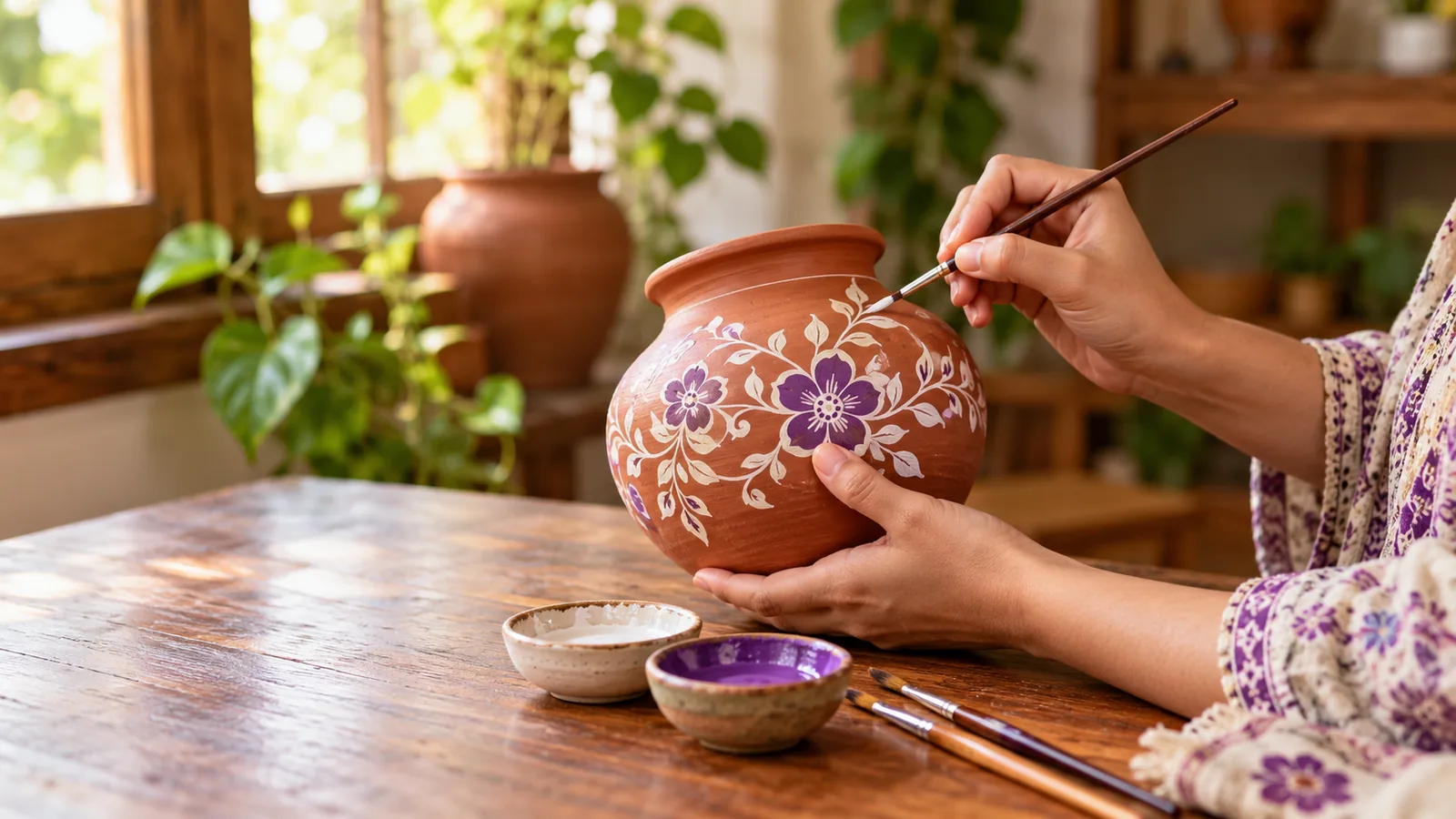
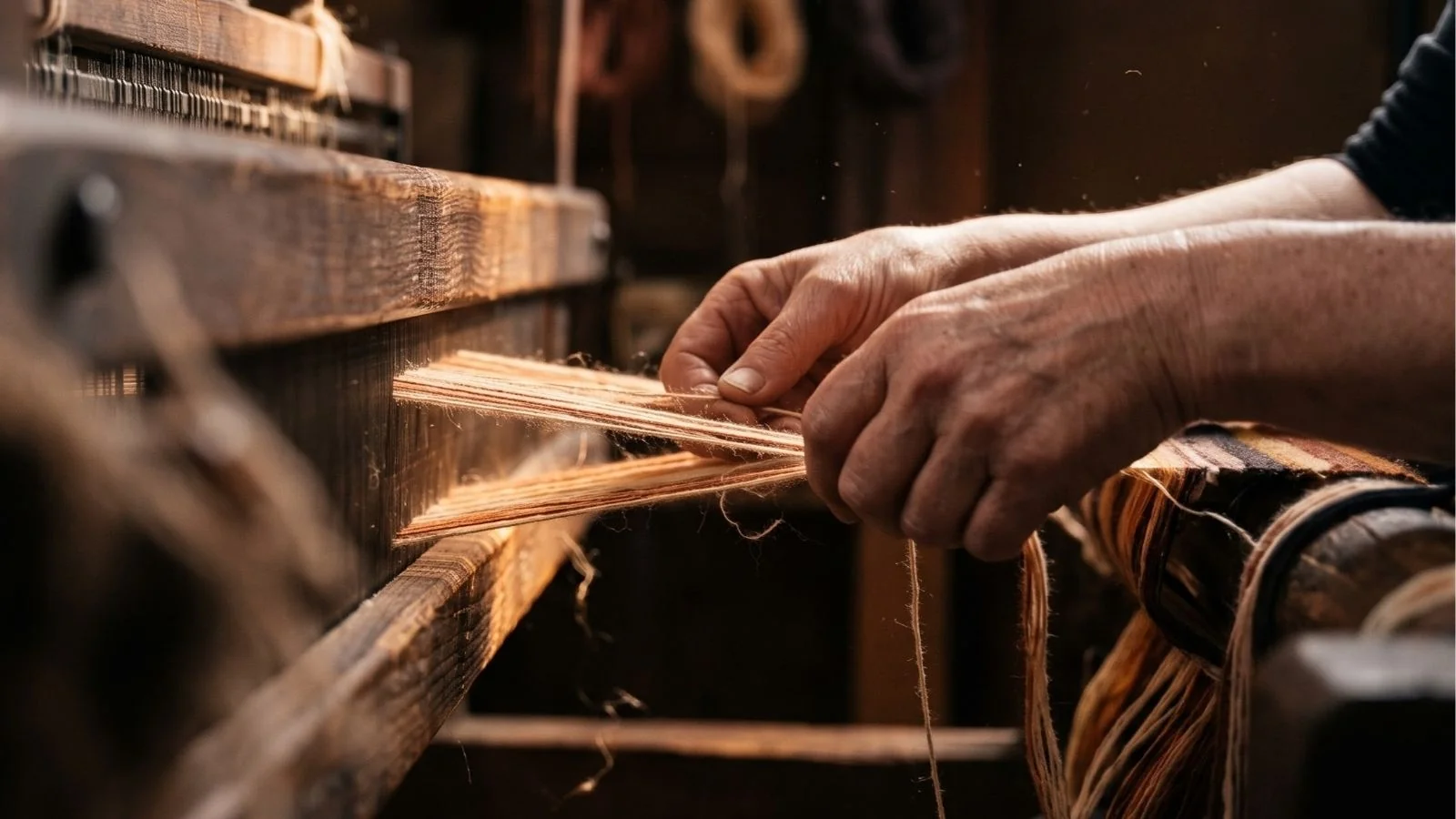
Many crafts are older than the people who make them today. Weaving on a handloom, painting patterns on clay pots and embroidering by hand are skills that move from one generation to the next.
A maker may have learned by sitting beside her mother or grandmother. She learned how to hold the thread, how to keep the lines even and how to know when a piece is truly done. That knowledge is not written in any book. It lives in her hands.
Embroidery, pottery painting and weaving each have their own patterns, and each pattern has its own meaning for the family or the village it comes from. Some designs are made for festivals. Some are made for the home, to bring colour to a plain wall or a quiet corner.
When you buy a craft like this, you are not only taking home an object. You are helping an old skill stay alive.
Small differences are the charm
Look closely at two handmade pieces from the same maker. They will be alike, but never exactly the same. A line may curve a little differently. A colour may sit slightly deeper in one corner.
These small differences are not mistakes. They show that a person made the piece, one at a time, with full attention. A machine repeats itself. A maker does not. That is why your piece is truly yours. Nobody else has one exactly like it.
How to buy handmade with confidence
If you are new to buying handmade crafts and decor, a few simple things can help you choose well.
- Look at the finish. Neat edges, even stitches and smooth surfaces show care.
- Read the description. A good listing is honest. It tells you the material, the size and how the piece is made.
- Know the maker. A maker who shares her name and her story is a maker who stands behind her work.
- Check how it is packed. Careful packing shows that the maker cares about the piece even after it leaves her hands.
- Ask questions. A good maker is happy to explain her work.
Handmade on Homakes
On Homakes, handmade crafts and decor come from real homes. Behind each piece is a person who spent time and skill on it. Homakes is a place where those makers can share their work with people who value it.
Do you make crafts at home? Join Homakes as a partner and let more people see what you create.